
The Problem Keeps Coming Back — Learning Recursion in the Echo Cavern

The Problem Keeps Coming Back — Learning Recursion in the Echo Cavern
A journey into a cavern of repeating sounds and patterns — where Arjun discovers that sometimes the best way forward is to repeat the same move with a smaller problem.
Characters: Arjun, Guru Bodhi · Arc: Intermediate · Pattern: Recursion, Call Stack, Base Case & Stack Overflow
📜 Sutra of the Echo — When Problems Repeat Themselves
Arjun stood at the mouth of the Echo Cavern, high above a sea of clouds. When he shouted his name, the mountain answered softly at first — then again, and again, fading into the distance.
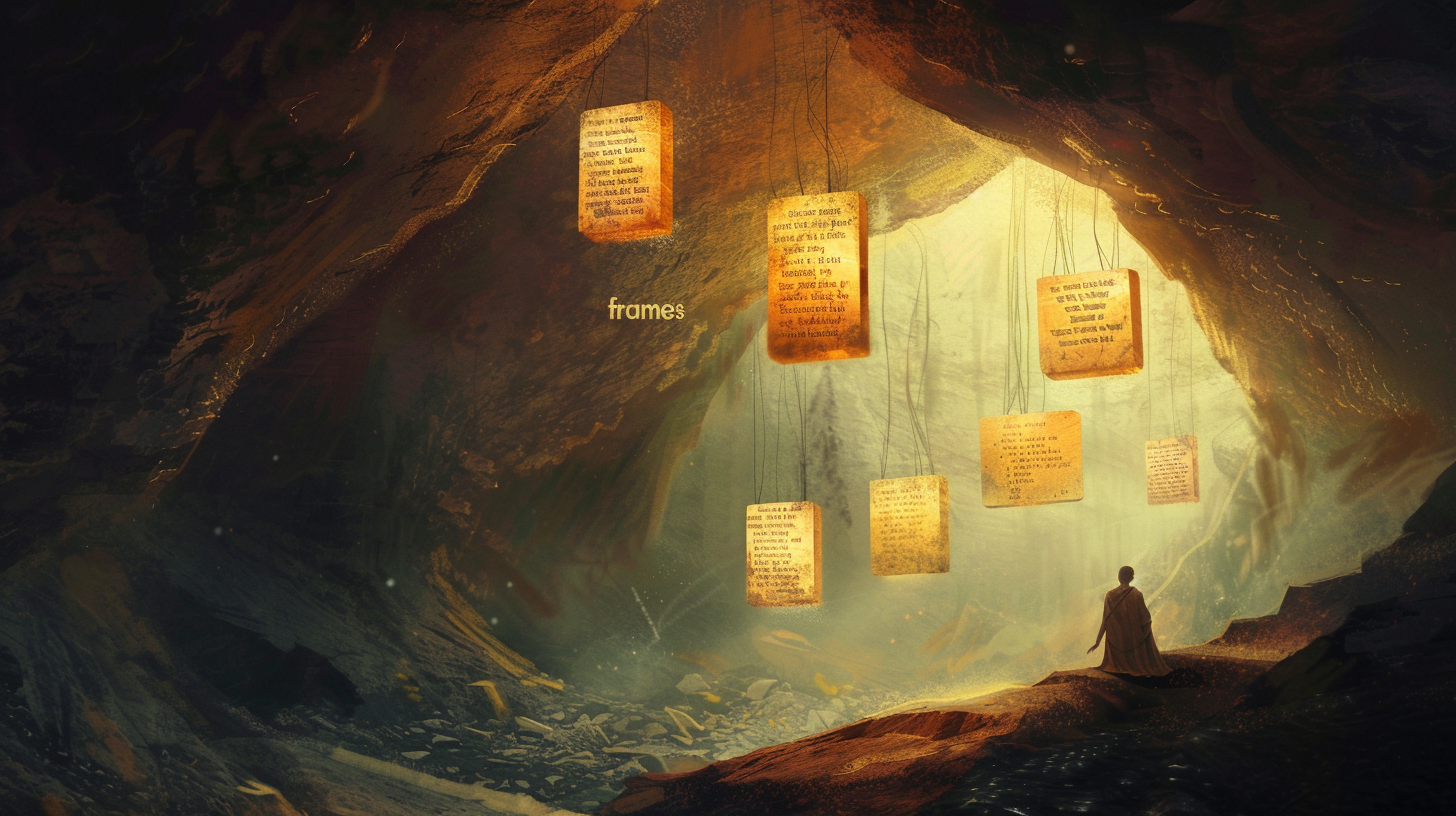
Inside, glowing scrolls hung from the ceiling like lanterns, each one repeating the same line of text with a small change. The deeper he looked, the more copies appeared — smaller, fainter, but clearly the same pattern.
“This is exactly like my work,” Arjun muttered. “The same problem keeps coming back — just with a smaller input. Trees inside trees. Lists inside lists. Subtasks inside bigger tasks. How am I supposed to reason about this without losing my mind?”

📜 Sutra of Confusion — Solving the Same Thing, Again and Again
Arjun unrolled a parchment of problems from the Gurukul:
- Sum all numbers in a nested list of lists.
- Traverse a family tree and print each ancestor.
- Explore all paths in a maze of caves.
“Each one feels like the same thing,” he sighed. “Take something big, break it into a smaller version of itself, repeat. But when I try to code it, I get lost. I forget what’s happening, which call is which, and my brain crashes before the program does.”
A warm lantern-light appeared beside him. Guru Bodhi stepped out of the shadows, staff crackling with tiny rings of light.

📜 Sutra of the Rule — How Recursion Actually Thinks
Guru Bodhi drew concentric circles of light on the cavern floor, each one smaller than the last.
“A recursive function,” he said, “obeys just two commandments:
- Base Case: A simple version of the problem that can be answered directly.
- Recursive Step: A rule that turns the bigger problem into a smaller version of the same problem — and trusts the echo to answer it.
“The computer keeps track of these nested calls on a call stack — like a vertical pile of glowing plates. Every time you call yourself, you add another plate. Every time you return a value, you remove one.”
🧭 Real-World Scroll — Where Recursion Shows Up
Recursion isn’t just a programming trick. It appears whenever a structure contains a smaller version of itself:
- A folder that contains folders, which contain more folders…
- A comment thread with replies, replies to replies, and so on.
- A family tree where each person has parents, who have parents…
- A game map where each region has sub-regions, each of which you explore with the same “explore” rule.
In all these cases, the algorithm is: “Handle this thing. Then, for each nested thing inside it, handle that using the same rule.”
🧠 The Echo Scroll — Simple Recursive Patterns
To make recursion feel less mystical, Guru Bodhi gave Arjun two simple scrolls: one numeric, one tree-shaped.
1) Sum of 1…n
First, a very small echo. Compute the sum of all integers from
1 to
n.
def sum_to_n(n):
    """Return 1 + 2 + ... + n using recursion."""

    # 1. Base case: tiny problem we can solve directly
    if n == 0:
        return 0

    # 2. Recursive step: n + sum of all numbers before it
    return n + sum_to_n(n - 1)
Every call asks the smaller problem sum_to_n(n - 1) for help, until eventually the echo hits n == 0 and returns
without asking again.
2) Traversing a Nested Structure
Now a more “real” example: printing all values in a nested list, where an element can be either a number or another list.
def print_nested(items, depth=0):
    """Print every value in a nested list structure."""

    indent = '  ' * depth

    for item in items:
        if isinstance(item, list):
            # Recursive step: handle the sublist with +1 depth
            print_nested(item, depth + 1)
        else:
            # Base case: plain value, just print it
            print(indent + str(item))
This is how many tree and graph algorithms feel: “Do something for this node, then recursively visit its children.”
⚠️ When Recursion Becomes a Dangerous Echo
Arjun watched as Guru Bodhi traced circles of light again and again — this time, without a center. The pattern spiralled deeper and deeper, brighter and brighter.
In code, this is a stack overflow: you keep calling yourself until there’s no more space left on the call stack.

📜 Sutra of Action — How Arjun Now Faces Recursive Problems
As the cavern dimmed, Arjun rewrote his scrolls. For each recursive problem, he forced himself to answer three questions:
- What is the base case? When is the problem so small I can answer it directly?
- How do I shrink the problem? What does the “same problem but smaller” look like?
- What do I do on the way back up? How do I combine the smaller answers into the big one?
With those answers, the Echo Cavern no longer felt like a trap. It was just a stack of voices, each waiting patiently for the one below it to speak.