I Keep Forgetting — But I Need Instant Recall
I Keep Forgetting — But I Need Instant Recall
In the Hall of Thousand Doors, Arjun learns that remembering isn’t about searching harder — it’s about mapping keys to the right door in one step: the mind’s version of a hash map.
Characters: Arjun, Guru Bodhi · Arc: Beginner / Intermediate · Pattern: Hash Maps, Key–Value Lookup, Collisions & Buckets
📜 Sutra of Confusion — When Memory Becomes a Maze
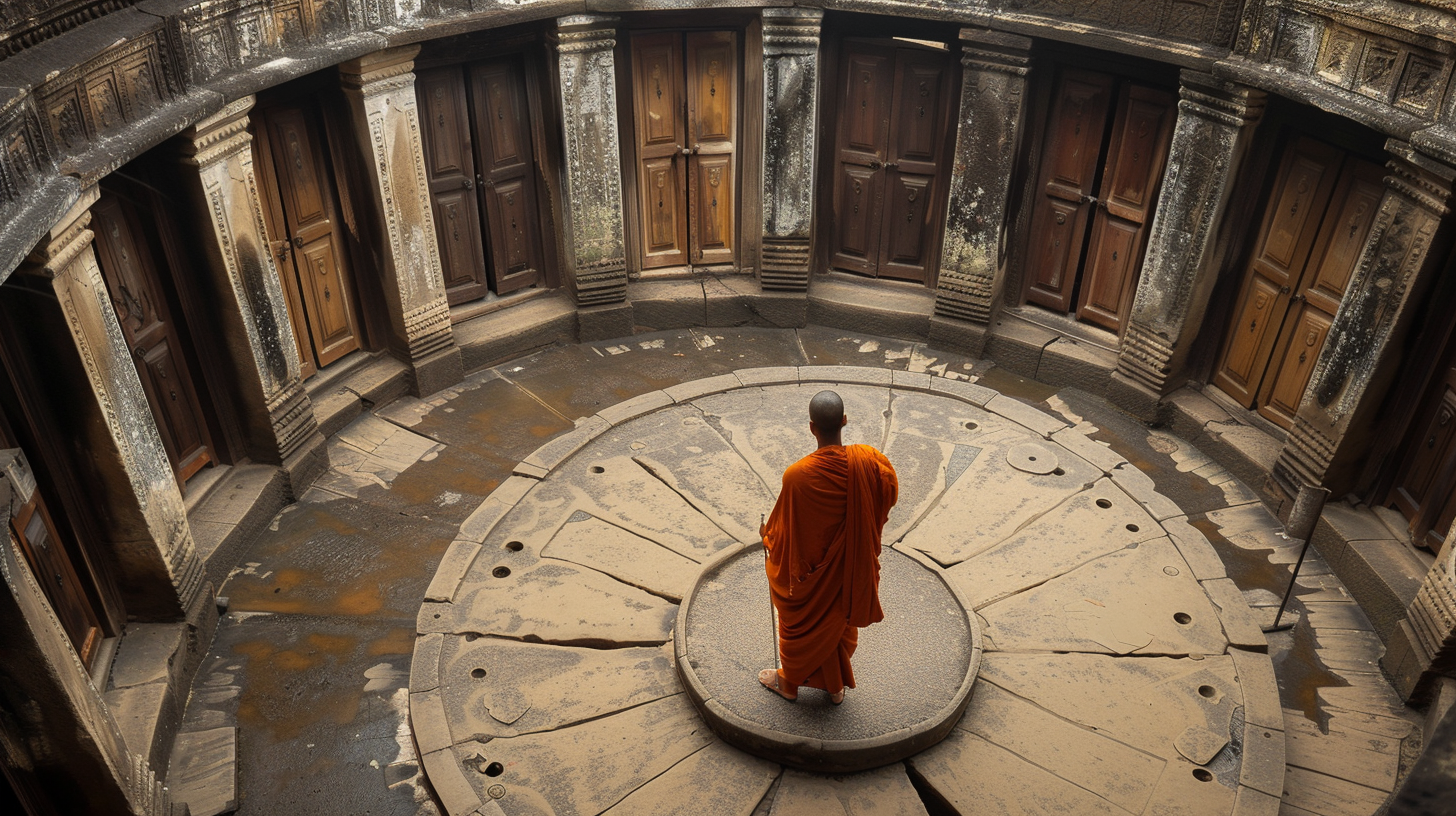
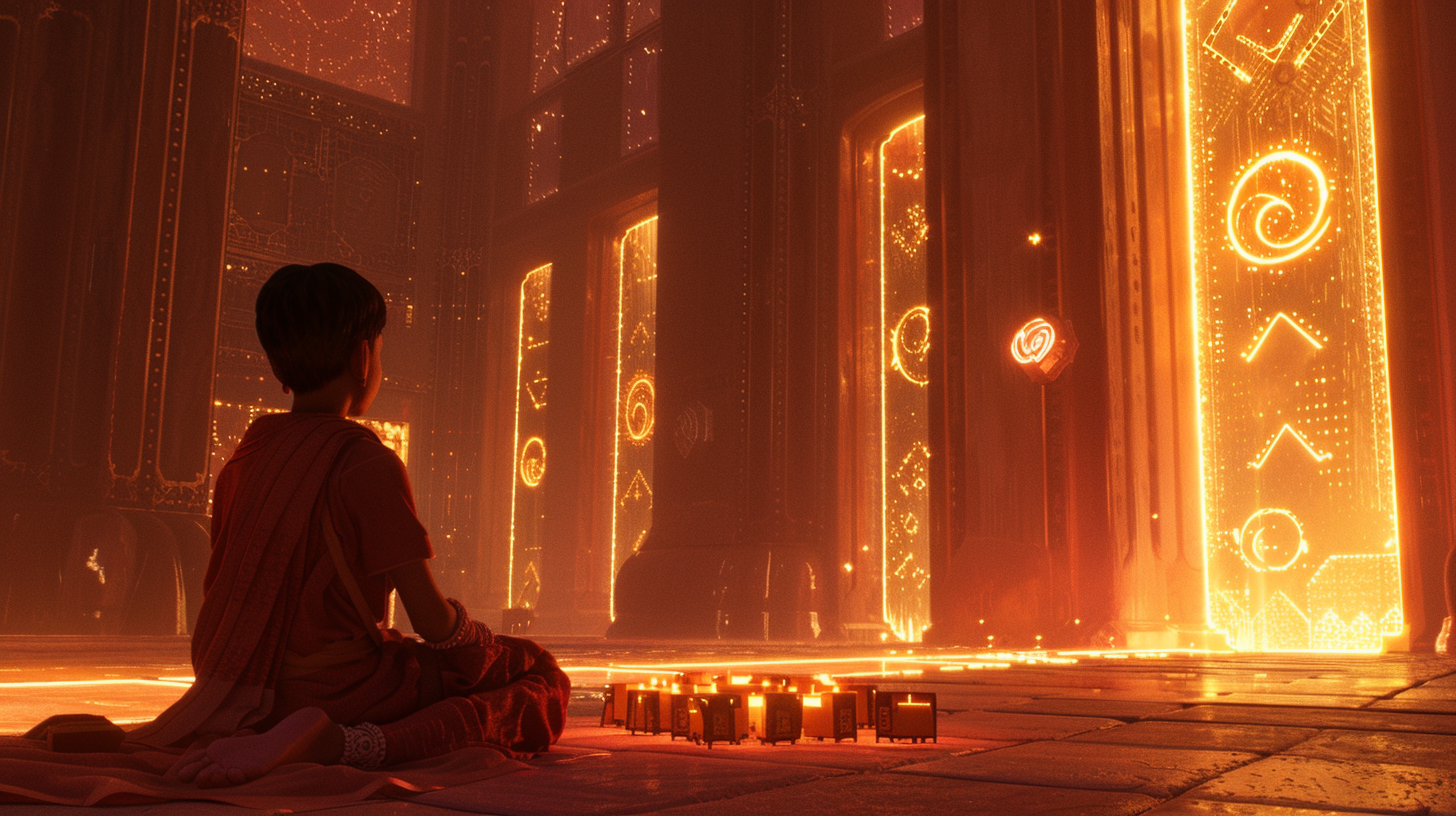
The Gurukul’s inner palace held a secret chamber called The Hall of Thousand Doors. Each door led to a small memory chamber: scrolls of past lessons, boxes of experiments, jars of herbs, maps of constellations.
Arjun stood in the center, turning in slow circles.
“I just need that one scroll,” he muttered, “the formula Guru gave me last week.” He knew the content. He could picture the script. But the location? Lost in a blur of doors.
- Door 12? Herbs and remedies.
- Door 307? Maybe star charts. Or maybe the exam problems.
- Door 511? No idea. But opening them all would take hours.
It felt uncomfortably familiar — like searching through:
- an email inbox for “that one message”,
- a notes app with 400 random points and no structure,
- a contact list where you forgot whether “Vikas” is saved as “Vik”.
“Why,” Arjun groaned, “does finding one thing mean scanning through everything?”
📜 Sutra of Mapping — From “Search” to “Direct Access”
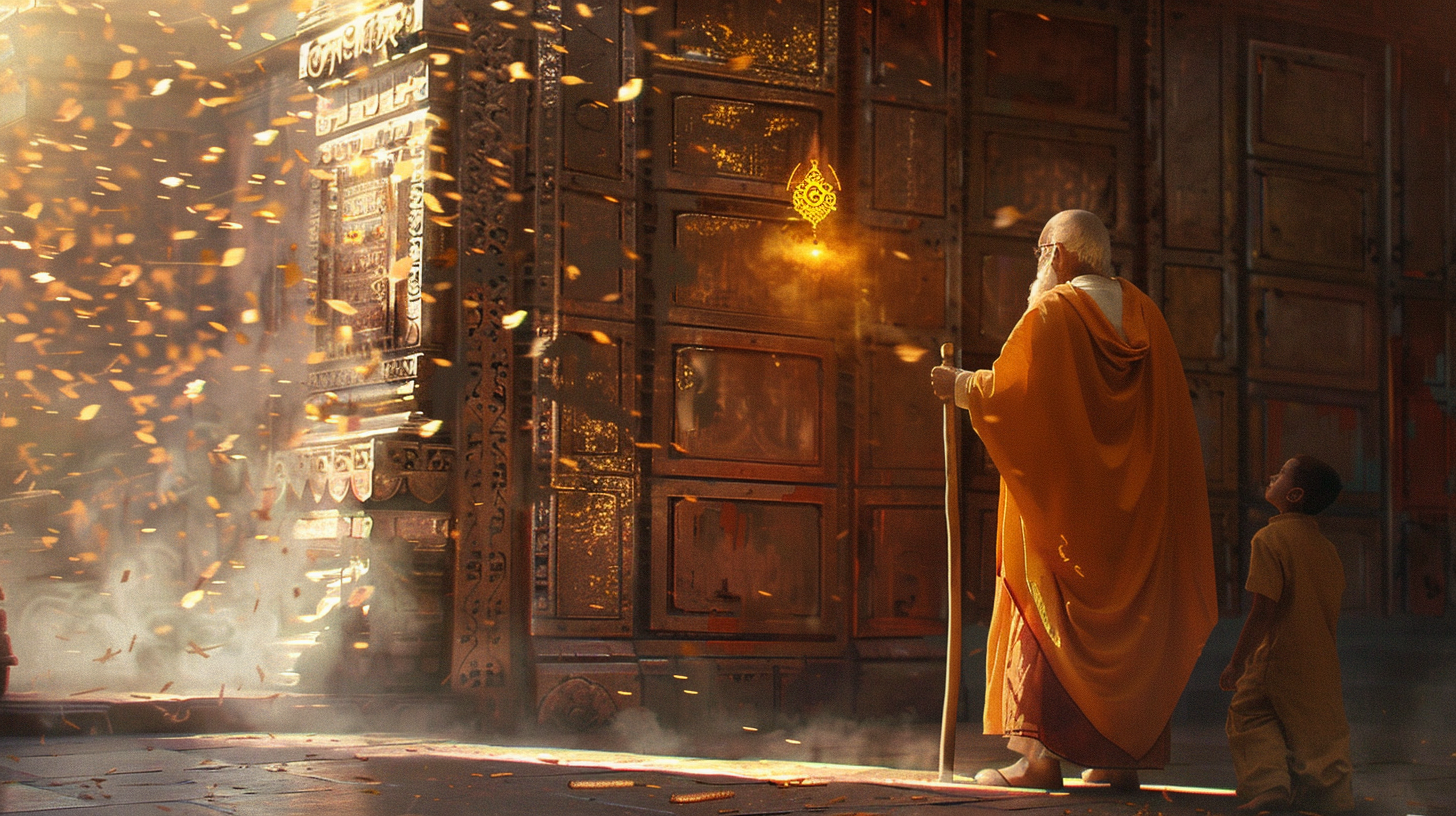
Footsteps echoed; Guru Bodhi appeared at Arjun’s side, staff glowing with a small golden symbol.
He raised the staff. The symbol on top shimmered and rotated, settling into a pattern of lines and arcs.
“Imagine,” Bodhi continued, “that every scroll has a name — a key. Instead of remembering where it is, we apply a small ritual, a hash, that turns the key into a number. That number points to a specific door.”
He traced shapes in the dust:
-
Key:
"star-lecture"→ Ritual: hash → Number:42 - Door for 42 always leads to the same chamber containing the star lecture scroll.
That, Bodhi explained, is the heart of a hash map: a magical cabinet that stores values so that, given a key, you can reach the right place in (almost) constant time.

🧭 Real-World Scroll — Where You Already Use Hash Maps
We already live with hidden halls of doors. The systems that feel “instant” are quietly using hash-map style thinking:
- Phone contacts: type a name, jump directly to the person’s number — you don’t scroll alphabetically from A to Z.
- Browser caches: URLs mapped to cached pages, so repeat visits are instant.
- Password managers: website → password record, instead of you remembering dozens of strings.
- Compilers & interpreters: variable name → memory slot, so the program can look up values quickly.
Hash maps trade a bit of space and cleverness for one superpower: O(1)-ish lookup. Not “search the list”, but “compute the location”.

🧠 The Scroll of Instant Recall — Hash Map in Python
Let’s encode the Hall of Thousand Doors as a dictionary. Each key is the scroll’s name. Each value is what it contains.
# A tiny "memory hall" for Arjun
scrolls = {
    "star-lecture": "Notes on constellations and angles",
    "focus-ritual": "Steps to regain concentration",
    "sorting-tale": "Story from the archive about ordering",
}

# Lookup is *instant* (average O(1))
topic = "focus-ritual"

if topic in scrolls:
    notes = scrolls[topic]
    print("Found:", notes)
else:
    print("Missing scroll!")
Under the hood, Python uses a hash function on the string key to decide where in memory to store the value. That’s the ritual Bodhi was talking about.
Conceptual Steps
1. Take the key (e.g. "focus-ritual").
2. Run a hash function to turn it into a big integer.
3. Use modulo (%) with the table size to get a slot index.
4. Store or retrieve the value from that slot — often via a small
bucket structure.
Time Complexity (Average Case)
-
Insert / Update:
O(1) -
Lookup:
O(1) -
Delete:
O(1)
Guru: “You are no longer counting doors. You ask the ritual once, and it points your feet to the right step.”
📉 When Collisions Appear
Arjun watched as Bodhi triggered the hash ritual for two different keys:
-
"moon-notes" -
"ocean-chant"
To Arjun’s surprise, both mapped to the same door number.
Instead of panicking, Bodhi opened the shared chamber. Inside was a neat shelf — a bucket — holding both scrolls. The ritual got them to the right room, and a small, fast search chose the exact scroll.
In code, this shows up as:
# table is a list of buckets (lists)
table_size = 8
table = [[] for _ in range(table_size)]

def put(key, value):
    idx = hash(key) % table_size
    bucket = table[idx]

    # update if key exists
    for i, (k, v) in enumerate(bucket):
        if k == key:
            bucket[i] = (key, value)
            return

    # else append new pair
    bucket.append((key, value))

def get(key):
    idx = hash(key) % table_size
    bucket = table[idx]

    for (k, v) in bucket:
        if k == key:
            return v
    return None
Collisions don’t destroy the idea. They just mean the “constant time” gets a tiny linear factor on a very small bucket — still far better than scanning the full hall.
⚠️ When Hash Maps Are the Wrong Tool
Arjun’s eyes shone. “So I should use hash-map thinking for everything?”
- Good fits: configs by name, caches, frequency counts, lookups by ID, joining records by key.
- Bad fits: keeping items sorted, walking ranges (like “all students with score between 70 and 90”), traversing hierarchies.
- Risks: bad hash functions, too many collisions, or leaking memory if you never delete.
Hash maps are like a lightning-fast librarian who can jump to any specific book when given its exact title — but who is useless if you ask, “Show me everything about rivers written before last year.”
📜 Sutra of Action — Building Your Own Memory Map
Before leaving the Hall, Arjun took out a fresh parchment and divided it into two columns: Key and Door.
-
Key:
"focus-ritual"→ Door: 18 -
Key:
"two-pointers-story"→ Door: 203 -
Key:
"hash-map-notes"→ Door: 42
Back in his room, he did the same for his real life: tags for notes, index pages in his notebook, a stable naming scheme for files and projects. Not fancy — but suddenly he wasn’t searching anymore.
That night, when he needed the star lecture again, his hand moved confidently: key → ritual → door → scroll. No anxiety. No maze.